Back to the future
March 13, 2026, by Gabriele Di Grazia, Claude ai
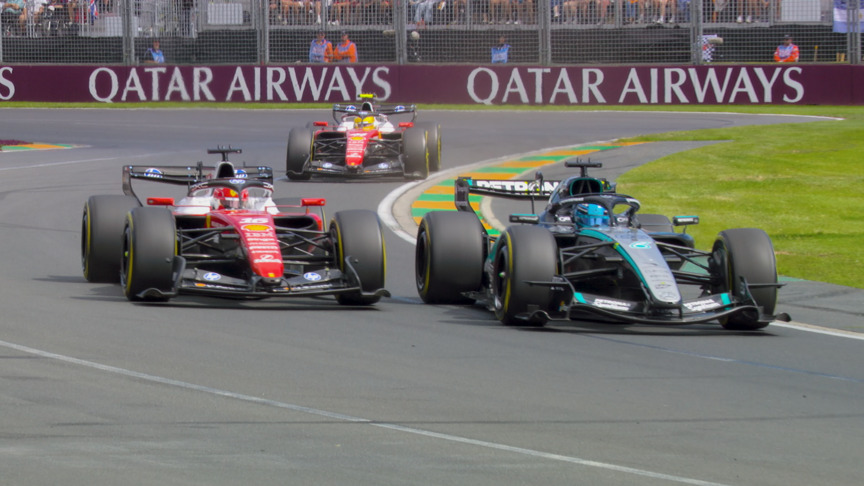
The first qualifying session of the season has now confirmed what many had feared: that this script is looking a lot like 2014.
Since winter, one of the most prominent rumors going around was the supposed massive power advantage of the Mercedes PU. This advantage supposedly came from a trick that made the compression ratio of the engine much greater than the regulations allowed, or at least intended to allow. As the most dedicated F1 fans know, after many checks by the FIA the engine turned out to be technically within the bounds of the written rule, even after a later test conducted at high temperatures.
This has been the main talking point, really. There were other things too: Ferrari, coming off a disastrous 2025 season, set the fastest times in both testing sessions, featuring many interesting innovations — such as the wing covering the exhaust and the so-called “macarena” wing (a name I’m not particularly fond of, to be fair).
Red Bull also sounded the alarm, insistently declaring a 30 to 40 hp advantage for the Mercedes PU, which was alarming indeed. No one, of course, could really tell the difference between what was reflecting reality and what was merely an attempt to obscure and confuse it. Because if your concept is worth anything, you want to hide it — it gives competitors less time to focus on it, analyze it, and figure out the pros and cons, and whether anything can be borrowed from it.
And so, after such a long and breathless winter, the red lights go out in Australia and the season begins. It’s a Mercedes 1-2. Antonelli finishes second despite:
- Antonelli destroying the car and gearbox in the final minutes of P3
- The car being reassembled without a more refined setup
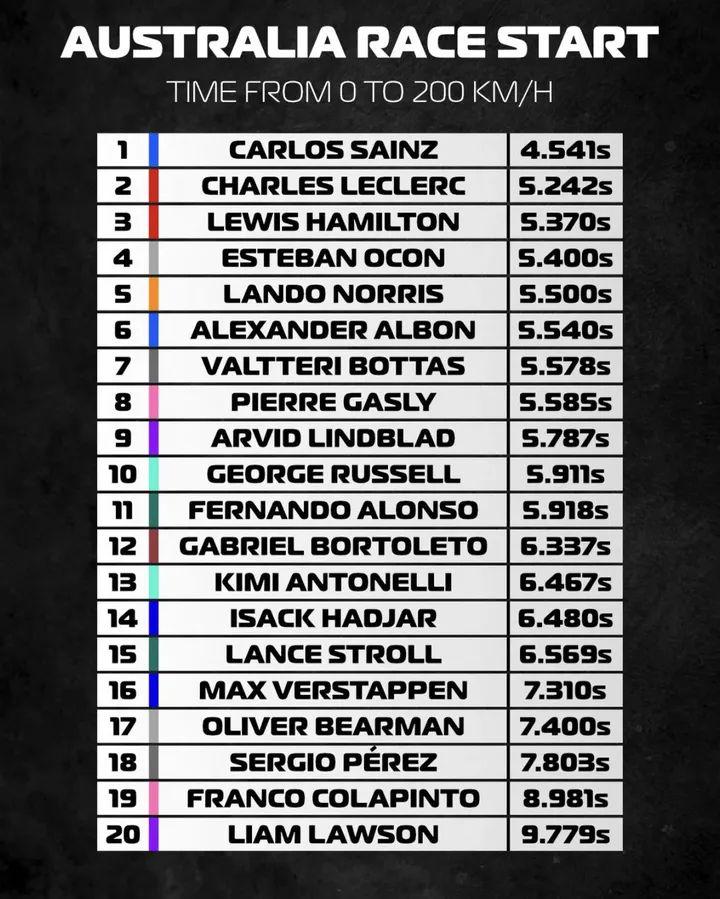
So all the pre-season concerns were essentially confirmed, which I find interesting. Ferrari appeared to be the only team that could realistically challenge Mercedes, and the challenge came right from the opening laps — Ferrari were able to launch off the starting line far more efficiently. It’s still not clear whether this is solely down to turbo size, since Sainz, driving a Mercedes-powered car, was the fastest from 0 to 200 km/h at the start.
Could Ferrari have threatened Mercedes with a better strategy?
Federico Albano writes on Passione motori:
Once they took the lead, the two drivers of Toto Wolff’s team gave the impression of being in total control of their advantage, freely matching the lap times of the Ferraris of Leclerc and Hamilton behind them. The slight gamble of the early pit stop saw both Russell and Antonelli deal with a certain amount of front graining — but, curiously, without this meaningfully affecting their lap times, a clear sign of a race being managed with a very comfortable margin.
We can therefore see clearly that, even accounting for the pace maintained during the second stint, and even with the VSC factored in, things would not have played out very differently.
So, 2026 sees a Mercedes back in its historically dominant form. But this season will be defined by the rate of development throughout the year, so we’ll see. That said, this kind of gap is not easily closed.